In today’s digital world, businesses depend heavily on the internet. Every file, message, and transaction travels online. This makes security very important. One of the best ways to protect business data is by using business VPN solutions.
A VPN helps companies stay safe, private, and connected. It creates a secure tunnel for internet traffic. This stops hackers, spies, and data leaks.
In this guide, we will explain everything in simple words. You will learn what VPNs are, why businesses need them, and how to choose the right solution. We will also talk about business vpns, open source vpn, and virtual private network free options.
What Are Business VPN Solutions?
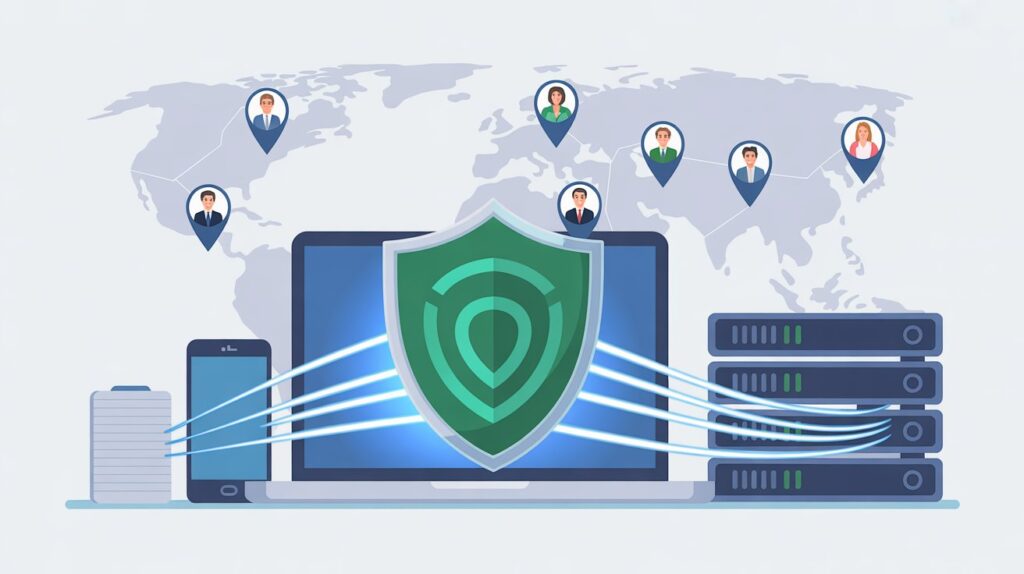
A business VPN solution is a secure network tool used by companies to protect their internet connection.
VPN stands for Virtual Private Network. It creates a private connection over the public internet. This means employees can safely access company data from anywhere.
For example, if someone works from home or travels, they can still securely access office files using a VPN.
Business VPNs are different from normal VPNs. They are designed for teams, offices, and large organizations. They include advanced security tools, management features, and user controls.
In simple words, a VPN acts like a secure tunnel between employees and company systems.
Why Businesses Need VPNs Today
Modern companies face many online threats. Hackers try to steal data, passwords, and financial information.
Here are the main reasons why businesses use VPNs:
1. Data Protection
A VPN protects sensitive business data like emails, customer records, and financial files. It encrypts everything.
2. Remote Work Security
Many employees work from home. A VPN allows safe access to office systems from anywhere in the world.
3. Prevent Cyber Attacks
VPNs reduce the risk of hacking, phishing, and data theft by hiding real IP addresses.
4. Secure Communication
Teams can share files and messages safely without fear of interception.
5. Global Access
Companies with international teams can connect easily and securely.
Without VPN protection, business data is always at risk.
Key Features of Business VPN Solutions
A good business VPN solution comes with powerful features. These features help companies stay safe and organized.
1. Strong Encryption
VPNs use encryption to lock data. This means no one can read it except the sender and receiver.
2. Multi-User Access
Businesses can connect many employees at the same time.
3. Central Control Panel
Admins can manage users, permissions, and security settings from one dashboard.
4. Fast Connection Speed
Good VPNs ensure that speed is not reduced during work.
5. IP Masking
It hides real IP addresses to protect identity.
6. Kill Switch
If VPN disconnects, the internet stops automatically to prevent leaks.
These features make business vpns very powerful and reliable.
Types of VPN Solutions for Businesses
There are different types of VPN solutions used by companies.
1. Remote Access VPN
This type is used by employees working from home or traveling. It connects them securely to office networks.
2. Site-to-Site VPN
This connects two office locations together. It is common in large companies.
3. Cloud-Based VPN
This is a modern solution hosted in the cloud. It is easy to manage and scalable.
4. Open Source VPN
An open source vpn is a VPN system where the code is publicly available. Companies can modify it according to their needs.
Open-source VPNs are popular among tech companies because they offer flexibility and transparency.
Benefits of Business VPN Solutions
Using a VPN brings many advantages for companies of all sizes.
1. Improved Security
VPNs protect sensitive business data from hackers.
2. Safe Remote Work
Employees can work from anywhere without risk.
3. Cost Efficiency
Some VPN solutions reduce the need for expensive private networks.
4. Better Privacy
VPNs hide browsing activity and online identity.
5. Access Control
Companies can control who accesses what data.
6. Reduced Risk of Data Theft
Even if data is intercepted, encryption keeps it safe.
Overall, business vpns help companies run safely and smoothly.
How VPN Protects Business Data
A VPN uses encryption to secure data. Let’s understand how it works in simple steps:
- Employee connects to VPN.
- VPN creates a secure tunnel.
- Data is encrypted before sending.
- It travels safely through the internet.
- Only the receiver can decrypt it.
This process makes it almost impossible for hackers to steal information.
Even on public Wi-Fi, VPN keeps data safe.
Open Source VPN: What It Means
An open source vpn is a VPN software whose code is publicly available.
This means developers can:
- Check the code for security issues
- Modify features
- Improve performance
- Build custom VPN systems
Advantages of Open Source VPN
- Transparent security
- Free or low cost
- Highly customizable
- Community support
Disadvantages
- Requires technical knowledge
- Setup can be complex
- May need manual maintenance
Many businesses use open-source VPNs when they want full control over their system.
Free VPNs (Virtual Private Network Free): Are They Safe?
Many people search for virtual private network free options. Free VPNs are available, but they are not always safe for business use.
Problems with Free VPNs
1. Weak Security
Free VPNs may not use strong encryption.
2. Slow Speed
They often have limited servers and bandwidth.
3. Data Logging
Some free VPNs collect user data and sell it.
4. Limited Features
They lack advanced tools needed for business.
5. No Customer Support
If something breaks, help is limited.
When Free VPNs Can Be Used
- Personal browsing
- Temporary use
- Testing purposes
For business use, paid VPN solutions are always better.
How to Choose the Best Business VPN Solution
Choosing the right VPN is very important. Here are key factors to consider:
1. Security Level
Look for strong encryption like AES-256.
2. Speed Performance
VPN should not slow down business work.
3. Number of Users
Check how many employees can connect at once.
4. Server Locations
More servers mean better global access.
5. Ease of Use
Simple dashboard and setup save time.
6. Customer Support
24/7 support is important for businesses.
7. Scalability
VPN should grow with your business.
A good business vpn should balance security, speed, and ease of use.
Best Practices for Using Business VPNs
To get the best results, companies should follow some best practices:
1. Use Strong Passwords
Always use complex passwords for VPN access.
2. Enable Two-Factor Authentication
This adds an extra layer of security.
3. Update Regularly
Keep VPN software updated to fix bugs.
4. Limit User Access
Give employees only the access they need.
5. Monitor Activity
Track usage for security and performance.
These steps make business vpns even more secure.
Future of Business VPN Solutions
The future of VPN technology is evolving quickly.
1. Cloud Integration
More VPNs will move to cloud systems.
2. AI Security
Artificial intelligence will detect threats faster.
3. Zero Trust Networks
Companies will verify every connection request.
4. Faster Speeds
New protocols will improve performance.
5. Stronger Encryption
Security standards will continue to improve.
VPNs will remain a key part of business cybersecurity for years to come.
Conclusion
Business VPN solutions are essential for modern companies. They protect data, support remote work, and improve online security.
While options like open source vpn offer flexibility, and virtual private network free tools may seem attractive, businesses should focus on secure and reliable paid solutions.
A strong VPN is not just a tool—it is a digital shield for your company.
By choosing the right business vpns, companies can work safely, grow faster, and stay protected in today’s digital world.