Artificial intelligence is becoming smarter every year. In the past, most AI systems could only work with one type of data at a time. For example, some AI tools could only read text, while others could only analyze images or recognize speech.
Today, a new type of technology is changing how machines understand information. This technology is called multimodal AI.
Multimodal AI is an advanced form of artificial intelligence that can process and understand multiple types of data at the same time. These data types may include text, images, audio, video, and even sensor information.
Just like humans use their eyes, ears, and brain together to understand the world, multimodal AI combines different sources of information to make better decisions and provide more accurate results.
As AI continues to evolve, multimodal systems are becoming an important part of modern technology.
What Is Multimodal AI?
Multimodal AI refers to AI systems that can understand and combine information from multiple data formats or “modes.”
These modes can include:
- Text
- Images
- Audio
- Video
- Speech
- Sensor data
Instead of looking at only one type of information, multimodal AI connects all available inputs to create a more complete understanding.
For example, if a user uploads a picture and asks a question about it, a multimodal AI system can analyze the image and understand the text question at the same time. It then provides a response based on both inputs.
This ability makes multimodal AI much more powerful than traditional AI systems.
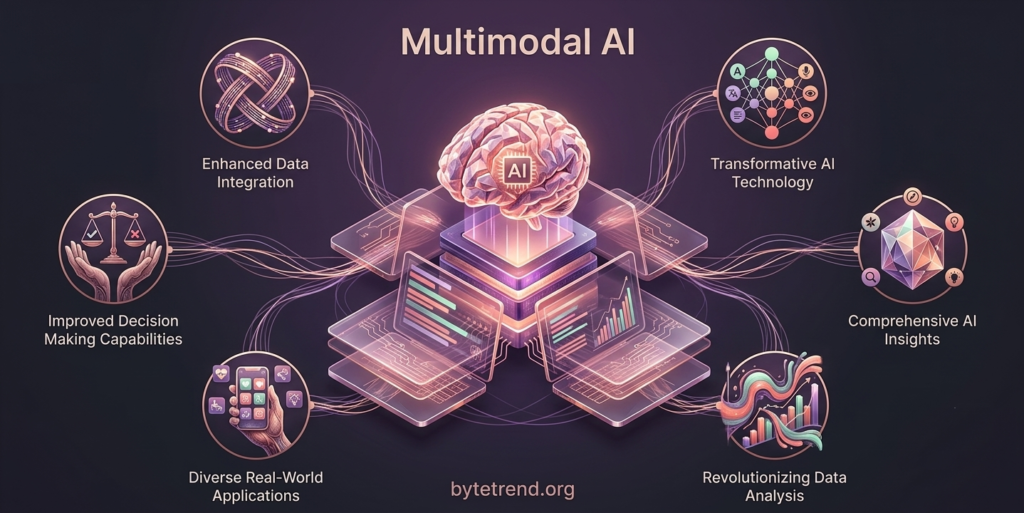
How Multimodal AI Works
Multimodal AI combines different technologies into one intelligent system.
The process generally follows three main steps:
Data Collection
The AI receives information from different sources.
Examples include:
- A photograph
- A voice recording
- Written text
- A video clip
Each source provides unique information.
Data Processing
The system analyzes each type of data separately.
For example:
- Vision AI processes images.
- Voice AI analyzes speech and sounds.
- Natural language models process text.
Each component extracts useful details from its input.
Data Fusion
The final step combines all the extracted information.
This process is often called multimodal fusion.
The AI connects information from different sources and creates a complete understanding of the situation.
This helps improve accuracy and context awareness.
The Importance of Vision AI in Multimodal Systems
What Is Vision AI?
Vision AI is a branch of artificial intelligence that allows machines to understand visual information.
It works with:
- Photos
- Videos
- Camera feeds
- Scanned documents
Vision AI helps computers recognize objects, people, actions, and environments.
How Vision AI Supports Multimodal AI
Visual information often provides context that text alone cannot provide.
For example, if a person uploads a picture of a damaged car and asks what happened, Vision AI can identify dents, scratches, or broken parts.
When combined with text questions, multimodal AI can provide more detailed answers.
Applications of Vision AI
Common uses of vision AI include:
- Facial recognition
- Medical image analysis
- Security monitoring
- Quality inspection in factories
- Self-driving vehicles
- Retail product recognition
Vision AI acts as the eyes of a multimodal AI system.
Understanding Voice AI
What Is Voice AI?
Voice AI enables computers to understand and respond to spoken language.
It combines several technologies, including:
- Speech recognition
- Natural language processing
- Speech synthesis
Voice AI allows users to interact with machines using natural conversation.
How Voice AI Works
The system listens to speech and converts it into text.
Then it analyzes the meaning behind the words.
Finally, it generates an appropriate response.
Some systems can even respond with human-like speech.
Why Voice AI Matters
Voice communication is one of the most natural ways humans interact.
By adding voice AI capabilities, multimodal systems become easier and more convenient to use.
Examples include:
- Virtual assistants
- Smart speakers
- Customer service bots
- Language translation tools
- Voice-controlled devices
Voice AI serves as the ears and voice of multimodal AI.
What Is Image Understanding?
Defining Image Understanding
Image understanding is the ability of AI systems to interpret and explain visual content.
It goes beyond simply identifying objects.
The AI also understands:
- Relationships between objects
- Activities in the image
- Context and meaning
- Visual details
Example of Image Understanding
Imagine a photo showing a child playing with a dog in a park.
Basic image recognition may identify:
- Child
- Dog
- Grass
However, image understanding can recognize that:
- The child is playing.
- The dog is interacting with the child.
- The scene takes place outdoors.
- The overall activity appears friendly and recreational.
This deeper understanding makes AI much more useful.
Role in Multimodal AI
Image understanding helps multimodal systems answer complex questions about visual content.
It improves context awareness and decision-making.
Key Components of Multimodal AI
Several technologies work together inside multimodal AI systems.
Natural Language Processing (NLP)
Natural Language Processing helps AI understand human language.
It analyzes:
- Text
- Questions
- Commands
- Conversations
Computer Vision
Computer vision powers image and video analysis.
It allows machines to detect and classify visual information.
Speech Recognition
Speech recognition converts spoken language into text.
This technology is essential for voice AI.
Machine Learning
Machine learning enables AI systems to learn from large amounts of data.
The more data they process, the better they become.
Deep Learning
Deep learning uses neural networks that imitate how the human brain works.
It helps AI discover patterns across multiple data types.
Benefits of Multimodal AI
Better Accuracy
Using multiple information sources reduces errors.
The AI can cross-check information from text, images, and audio.
Improved Context Understanding
Multimodal systems understand situations more completely.
This leads to better responses and decisions.
More Natural Human Interaction
Humans communicate using words, sounds, gestures, and visual cues.
Multimodal AI mirrors this behavior.
Enhanced User Experience
Users can interact in multiple ways.
They can speak, type, upload images, or share videos.
This flexibility improves usability.
Faster Decision-Making
Combining information sources allows AI to make decisions more efficiently.
This is valuable in healthcare, security, and business applications.
Real-World Applications of Multimodal AI
Healthcare
Doctors use multimodal AI to analyze:
- Medical images
- Patient records
- Voice notes
This helps improve diagnosis and treatment planning.
Education
Educational platforms use AI to create interactive learning experiences.
Students can learn through:
- Text
- Images
- Videos
- Audio lessons
Customer Support
Businesses use multimodal AI to handle customer inquiries.
Customers may:
- Speak to virtual assistants
- Upload images of products
- Send text messages
The AI understands all inputs together.
Retail and E-Commerce
Online stores use multimodal AI for:
- Product recommendations
- Visual search
- Customer assistance
Shoppers can upload product photos and find similar items instantly.
Autonomous Vehicles
Self-driving vehicles rely heavily on multimodal systems.
They combine:
- Camera feeds
- Sensor data
- GPS information
- Road signs
This helps vehicles navigate safely.
Challenges of Multimodal AI
Data Complexity
Managing multiple types of data is difficult.
Each format requires specialized processing.
High Computing Requirements
Multimodal systems need significant computing power.
Processing images, speech, and text simultaneously can be resource-intensive.
Data Quality Issues
Poor-quality images or unclear audio can reduce performance.
The system depends on accurate input data.
Privacy Concerns
Many multimodal applications handle personal information.
Organizations must protect user privacy and data security.
Integration Challenges
Combining different AI technologies into one system is complex.
Developers must ensure all components work together effectively.
The Future of Multimodal AI
The future of multimodal AI looks very promising.
Researchers are developing systems that understand the world more like humans.
Future advancements may include:
Smarter Digital Assistants
Virtual assistants will understand text, images, speech, and video simultaneously.
Better Human-AI Collaboration
AI systems will become more helpful in workplaces and daily life.
Advanced Robotics
Robots will use vision AI, voice AI, and image understanding to interact naturally with people.
Improved Healthcare Solutions
Medical professionals will gain more accurate diagnostic tools powered by multimodal intelligence.
More Personalized Experiences
AI systems will better understand user preferences and provide customized recommendations.
Multimodal AI vs Traditional AI
Traditional AI
Traditional AI typically focuses on one type of input.
Examples include:
- Text-only chatbots
- Image recognition software
- Speech recognition systems
Multimodal AI
Multimodal AI combines multiple inputs at once.
This creates:
- Better context
- Higher accuracy
- More intelligent responses
- Improved decision-making
As a result, multimodal AI is becoming the next major step in artificial intelligence development.
Conclusion
Multimodal AI represents a major advancement in artificial intelligence. Instead of relying on a single type of data, it combines text, speech, images, videos, and other information sources to create a deeper understanding of the world.
Technologies such as vision AI, voice AI, and image understanding play a central role in making these systems effective. Together, they allow machines to see, hear, analyze, and respond more intelligently.
From healthcare and education to customer service and autonomous vehicles, multimodal AI is transforming industries across the globe. Although challenges such as data complexity and privacy concerns still exist, ongoing improvements in machine learning, deep learning, computer vision, and natural language processing continue to push the technology forward.
As artificial intelligence becomes more advanced, multimodal AI is expected to become a key part of everyday life, helping people interact with technology in more natural, efficient, and meaningful ways.